

The plumbing cost of a basement bathroom in Sioux Falls depends mostly on whether the new drains can fall by gravity to your sewer line or need a pump to lift them, and on how much concrete has to be cut to get them there. A house with a rough-in already stubbed up under the floor is the simple case; one with no rough-in and a shallow sewer line is the involved one.
Why This Matters to Homeowners
A basement bathroom is one of the most useful things you can add to a house here. Many homes in Sioux Falls, Harrisburg, Tea and Brandon were built with an unfinished lower level, and finishing it adds bedrooms and living space that a bathroom makes usable.
It is also the part of a basement finish that is hardest to change later. Drywall, flooring and trim can be redone. Drain lines set in concrete cannot, without breaking the floor again. Getting the plumbing plan right before anything is framed is where most of the money is saved.
Why this guide has no dollar figure
We do not quote prices in a guide. The cost of a basement bathroom depends on what is under your floor, and nobody can see that over the phone. What we can do is explain what decides the number, so you can plan the layout and read a quote properly.
Gravity Drain or Pump: The Question That Decides Everything
Drains need a steady fall towards the sewer. Upstairs, that is easy. In a basement, the new toilet, shower and sink sit close to, or below, the level where the building sewer leaves the house.
There are two ways it works:
- Gravity drainage. If the sewer line leaves the house below the basement floor, the new drains can be set in the floor with the right slope and tie in directly. This is the most reliable option, with no moving parts.
- A sewage ejector or pump system. If the sewer line leaves above the basement floor, waste from the new fixtures collects in a sealed basin and is pumped up to the line. It works well when it is sized and vented correctly, but it needs power, an accessible lid and occasional service.
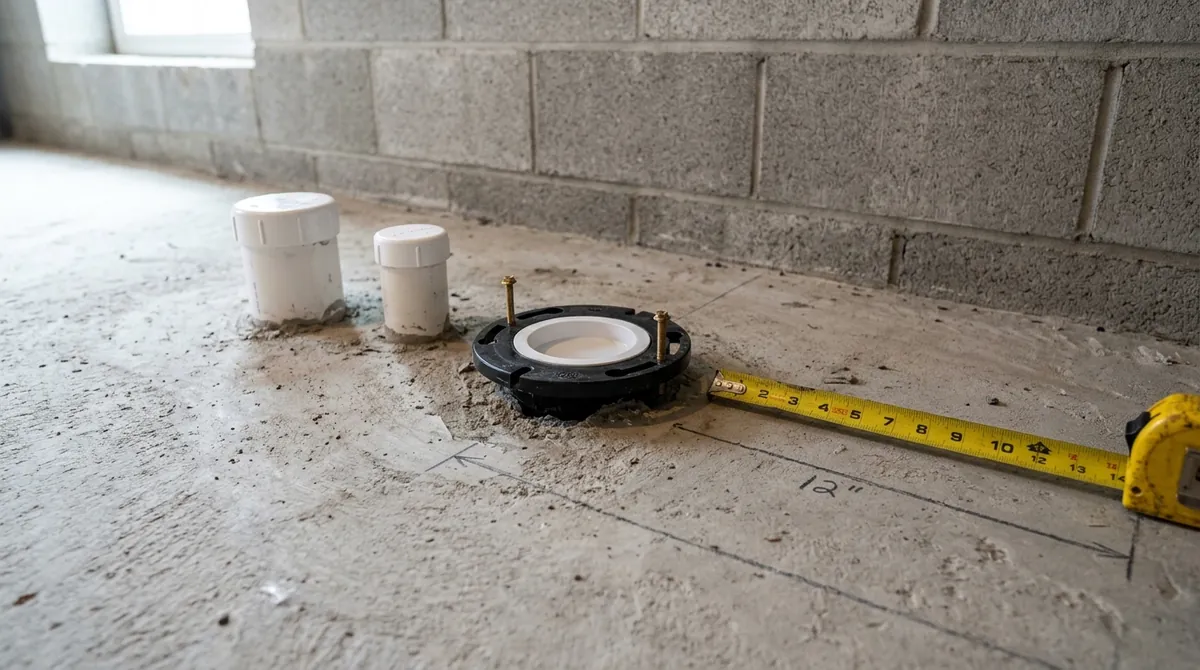
Many newer homes have a rough-in already: capped drain stubs in the floor and a vent run up through the framing, placed by the builder for a future bathroom. If yours does, check it before planning the room around it. A stub in the wrong place, or one that was never tied in properly, is better found now than after the tile is down.
We walk the basement, find where the sewer line exits and how deep it runs, and tell you which applies before any concrete is broken.
What You Are Actually Paying For
The plumbing side of a basement bathroom usually includes:
- Cutting and removing concrete along the drain routes, then patching it after inspection.
- Drain lines for the toilet, shower and sink, set at the right slope and tied into the building sewer, or into a pump basin.
- Venting, which every fixture needs and which often has to run up through a wall to connect with the existing vent stack.
- Hot and cold water supply lines run from the existing system.
- Pressure testing and inspection before the floor is closed.
- Trim-out: setting the toilet, vanity, faucet and shower valve once the room is finished.
The plumbing for a bathroom remodel typically takes two to five working days on site, spread across the rough-in and trim-out stages, with the framing, drywall and tile in between.
The Five Things That Move the Price
- Rough-in or no rough-in. Existing stubs in the right place save the most concrete work.
- Distance to the sewer line. A longer run means more floor to cut, more pipe and more patching.
- Gravity or pump. A pump system adds the basin, the pump, a dedicated vent and an electrical outlet.
- Fixture count and type. A half bath with a toilet and sink is a smaller job than a full bath with a shower, and a tiled walk-in shower needs a different drain than a one-piece unit.
- Water heater capacity. A basement bathroom adds a shower to the same tank. If the existing water heater is already stretched, it may need attention at the same time.
Permits: What the City of Sioux Falls Requires
A basement bathroom is not a weekend project you can skip the paperwork on. The City of Sioux Falls lists a lower-level finish among the projects that need a building permit, and the building permit does not cover the plumbing unless the work is done by licensed electrical, mechanical and plumbing contractors. Homeowners who own and live in a single-family house and do the trade work themselves need separate plumbing, electrical and mechanical permits (City of Sioux Falls, Building Permit FAQs).
The same page explains that the city licenses plumbing contractors and that you can call Building Services at 605-367-8672 to confirm a contractor is licensed. Towns outside Sioux Falls, such as Harrisburg, Tea and Brandon, have their own building departments, so check with yours.
The inspection matters for another reason: when you sell the house, a finished basement with permitted plumbing is a much easier conversation than one without.
How the Work Is Staged
A basement bathroom fits into the rest of the basement finish in a set order:
- Plan the layout. Decide where the toilet, shower and sink go while it still costs nothing to move them. Keep fixtures close together and close to the existing drain where you can.
- Rough-in. Concrete is cut, drains, vents and supply lines are installed, and the work is pressure tested and inspected before the trench is filled and the floor patched.
- Framing, electrical, drywall and tile. The other trades finish the room around the plumbing.
- Trim-out. Fixtures are set and connected, everything is tested, and the shower and toilet are run before handover.
If the basement finish is part of a larger remodel, the heating has to be planned at the same time. A finished lower level needs heat, and adding a run or a zone is far cheaper before the ceiling goes up.
How to Compare Quotes
Check that each quote says:
- Whether the drains will be gravity or pumped, and why.
- How much concrete cutting and patching is included.
- Where the new vents connect.
- Which fixtures are included, or whether you are supplying them.
- Who pulls the plumbing permit and books the inspection.
- Whether trim-out is included or priced separately.
A quote that skips the venting or the concrete patch is not a cheaper job, only an unfinished one.
Planning a Basement Bathroom in Sioux Falls? Gold Standard Plumbing & Heating Is Ready to Help
Gold Standard Plumbing & Heating is locally owned, licensed, bonded and insured, with plumbing and heating under one Universal Mechanical License. We work with homeowners and with builders and contractors on basement finishes and remodels across Sioux Falls, Harrisburg, Tea, Brandon and the surrounding towns. We will tell you whether your basement drains by gravity or needs a pump before anything is broken. Read more about our new construction and remodel plumbing in Sioux Falls, and if your water heater is already working hard, our water heater service.
Call us at (605) 530-6950 or contact us while the layout can still change. We answer weekdays from 7:30 am to 5 pm.