
Furnace replacement cost in Sioux Falls is driven mostly by three things: the efficiency of the new furnace, whether the house needs new venting or duct changes to take it, and whether the unit is sized to the house rather than copied from the old one. Before any of that, the first question is whether the old furnace actually needs replacing, because a repair is sometimes the better spend.
Why This Matters to Homeowners
Most furnace replacements are not planned. The old unit fails on a cold night, someone quotes a new one, and a decision that will shape your heating bills for the next fifteen years or more gets made in a few minutes.
A furnace is also not a box you buy off a shelf. Two quotes for "a new furnace" can describe very different jobs: one swaps the unit and reconnects it, the other also replaces the venting, adds a condensate drain, corrects the gas line and tests the system under load. The lower number is not always the cheaper job once the first winter is over.
Why this guide has no dollar figure
We do not quote prices in a guide, because the number depends on your house, and a figure that ignores your venting, ductwork and access is not worth much. What we can do is explain what you are paying for, so you can read a quote properly and ask the right questions.
First, Decide Whether It Needs Replacing at All
A furnace that has stopped working has not necessarily reached the end of its life. A failed igniter, flame sensor, pressure switch or blower motor is a repair, and on a younger unit it is almost always the right call.
As a working rule:
- Under about twelve years old: a repair usually wins, unless the heat exchanger has failed.
- Twelve to fifteen years: it depends on the part and the cost of the fix. One repair is reasonable; a second major one in two seasons is a signal.
- Past fifteen years, with a major part failing: replacement is normally the better spend, because efficiency has dropped and more parts are close to the end of their life.
A cracked heat exchanger is the main exception at any age. It can let combustion gases into the air the furnace circulates, and on most residential furnaces it means replacement. If anyone tells you yours is cracked, ask to see it.
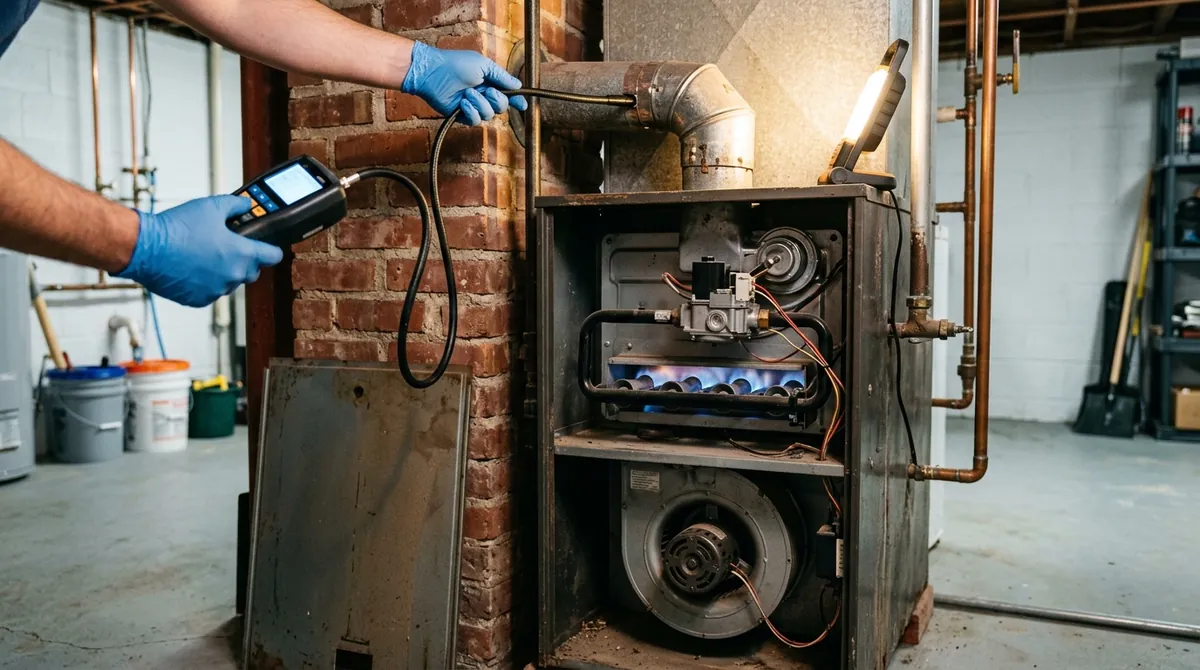
We test combustion, airflow and controls before recommending anything, and when a unit is near the end of its life we price both the repair and the replacement, with the reasoning, so the choice stays yours.
What You Are Actually Paying For
A furnace replacement quote covers more than the furnace. A complete job includes:
- Removing and disposing of the old unit.
- The new furnace, matched to the house.
- Venting: reconnecting the existing flue, or running new vent pipe for a high efficiency unit.
- A condensate drain line, and sometimes a condensate pump, for high efficiency units.
- Reconnecting the gas supply and checking it for leaks.
- Transitions between the new unit and the existing ductwork.
- Thermostat connection, or a new thermostat where the old one is not compatible.
- Commissioning: setting gas pressure, checking combustion and temperature rise, and running the system under load.
A like-for-like furnace replacement here takes about a day. Venting or duct changes can add a second day.
The Six Things That Move the Price
- Efficiency. Higher efficiency furnaces cost more up front and less to run. More on this below.
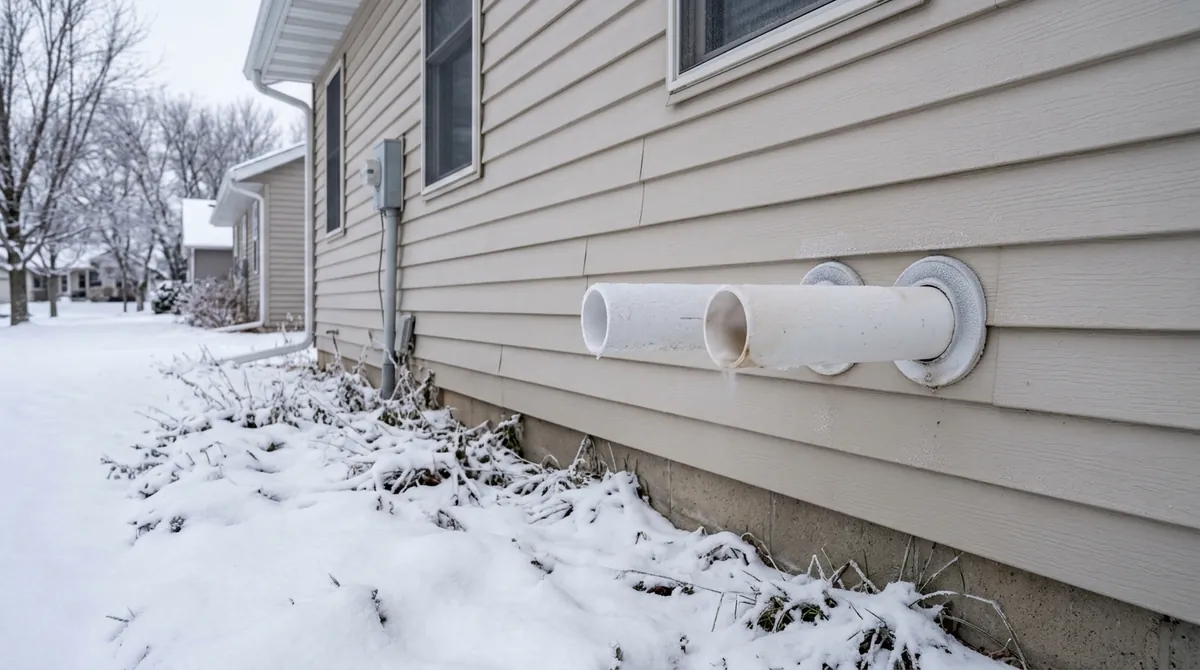
- Venting. Moving from an older chimney-vented furnace to a high efficiency unit means new vent pipe, usually run out through a side wall, plus a drain for the condensate it produces.
- Ductwork. If the existing ducts are undersized, leaky or badly balanced, a new furnace will not fix the cold rooms. Transitions are normal; larger duct changes add cost.
- Sizing. A furnace sized from a heat-loss calculation of your house can come out smaller than the one it replaces, especially where windows, insulation or an addition have changed things since the original install.
- Access. A tight mechanical room, a crawl space or a unit in a farm shop takes longer than an open basement.
- Single stage, two stage or modulating. Units that can run at lower output for longer cost more but give more even heat and quieter running through a long South Dakota winter.
Standard or High Efficiency in an Eastern South Dakota Winter?
Furnace efficiency is measured as AFUE, the share of the fuel that becomes heat in the house. In a climate with long, cold winters, that difference is paid back every heating season.
ENERGY STAR puts it in plain numbers. Its certified gas furnaces for the northern US are "up to 18 percent more energy efficient than baseline models" and can save about $160 a year in energy costs (ENERGY STAR, Furnaces). Sioux Falls, Brandon and the rest of eastern South Dakota sit firmly in that northern region.
The trade-off is installation. High efficiency furnaces condense water out of the exhaust, so they need plastic vent pipe and a condensate drain rather than the old metal flue. In a house that has never had one, that work is part of the price, and it is the part a cheap quote sometimes leaves out.
When standard efficiency still makes sense
There are cases where a standard efficiency furnace is reasonable: a part-time heated shop, a building where new venting is impractical, or a house that will change hands soon. We will tell you when that applies rather than selling the bigger number by default.
Brandon, Tea, Harrisburg and the Acreages: What Changes Outside Town
Most of what drives the cost is the same across the area, but a few things change outside Sioux Falls:
- Newer builds in Brandon, Tea and Harrisburg often have furnaces installed by the original builder, sometimes sized generously. Replacement is a chance to size correctly, and sometimes to come down a size.
- Older homes in Sioux Falls and Brookings are more likely to need venting changes, because many still vent through a masonry chimney.
- Acreages and farm shops add long duct runs, part-time heating and propane rather than natural gas. Those change the equipment choice and the install.
How to Compare Furnace Quotes Without Getting Caught Out
Put the quotes side by side and check that each one says:
- The make, model and efficiency rating of the furnace.
- How it was sized: a heat-loss calculation, or "same as the old one".
- Whether new venting and a condensate drain are included.
- What duct work is included, and what is not.
- Whether the gas line and thermostat are covered.
- Who pulls the permit, if one is needed.
- What the commissioning involves, and whether the system is tested under load.
- What the manufacturer warranty requires, such as registration or annual service.
If one quote is much lower, the gap is usually in that list. Ask what is missing before you choose.
When to Call a Professional
Call before the furnace fails if it is past fifteen years old, short cycles, makes booming noises at ignition, or your heating bill has climbed with no change in use. A tune-up before the first hard freeze often finds a worn part while there is still time to order it.
If you smell gas, leave the house and call the gas utility first. Then call us.
If the heat has already gone out, our guide to what to do when your heat goes out in Sioux Falls covers the first hour, including how to protect your pipes while you wait.
Need a New Furnace in Sioux Falls? Gold Standard Plumbing & Heating Is Ready to Help
Gold Standard Plumbing & Heating is locally owned, licensed, bonded and insured. The owner holds a Universal Mechanical License and manufacturer-certified training, so the heating, gas and venting are covered by one licence. We test before we replace, price the repair and the replacement side by side when a unit is near the end of its life, and commission every new furnace under load. Read more about our furnace repair and replacement in Sioux Falls, or our heating service in Brandon.
Call us at (605) 530-6950 or contact us to have your furnace checked in Sioux Falls, Brandon and the surrounding towns. We answer weekdays from 7:30 am to 5 pm, and emergency calls are welcome during those hours.