

Sewer line repair cost in Sioux Falls is set mostly by where the fault is, how deep the pipe runs and what sits on top of it, not by the pipe itself. A blocked line that only needs clearing is a service call; a cracked or sagging section that has to be dug up and replaced is a different order of cost, and the first job is finding out which one you have.
Why This Matters to Homeowners
A sewer problem rarely arrives at a convenient time. Water comes up through a basement floor drain, the toilets gurgle when the washer empties, and a decision that deserves some thought gets made in a hurry.
That is when people overpay, or underpay and end up paying twice. A line that is cleared but not diagnosed tends to block again within months. A line that is dug up when it only needed cleaning costs far more than it should have. Knowing what actually drives the price lets you ask the right questions before agreeing to anything.
Why this guide has no dollar figure
You will find national averages for sewer repair online. They fold together cities with different labour rates, soil, frost depth and pipe ages, so they tell you very little about a line under a lawn in Sioux Falls. What is useful is understanding the structure of the cost, so a quote makes sense when you read it.
First, Find Out Whether It Is a Cleaning Job or a Repair
Most sewer calls turn out to be blockages, not broken pipe. Grease, wipes and roots that have grown into a joint can all stop a line without the pipe itself failing. Clearing those is a service call measured in hours.
A repair is needed when the pipe is physically damaged:
- A crack or broken joint that lets roots and soil in.
- A belly or sag, where a section of pipe has settled and holds water and waste.
- Collapsed or crushed pipe, often under a driveway or where heavy equipment has crossed.
- Heavily scaled cast iron, where the opening has narrowed so much that cleaning buys only weeks.
The tell is repetition. A drain that clogs once was probably a blockage. A main line that backs up every few months has a cause, and clearing it again treats the symptom. On our drain cleaning and sewer repair in Sioux Falls page we describe the order we work in: clear the line, find out why it blocked, then show you the options. You hear whether the line is dirty or damaged before anything is dug.
Who Pays for Which Part of the Line
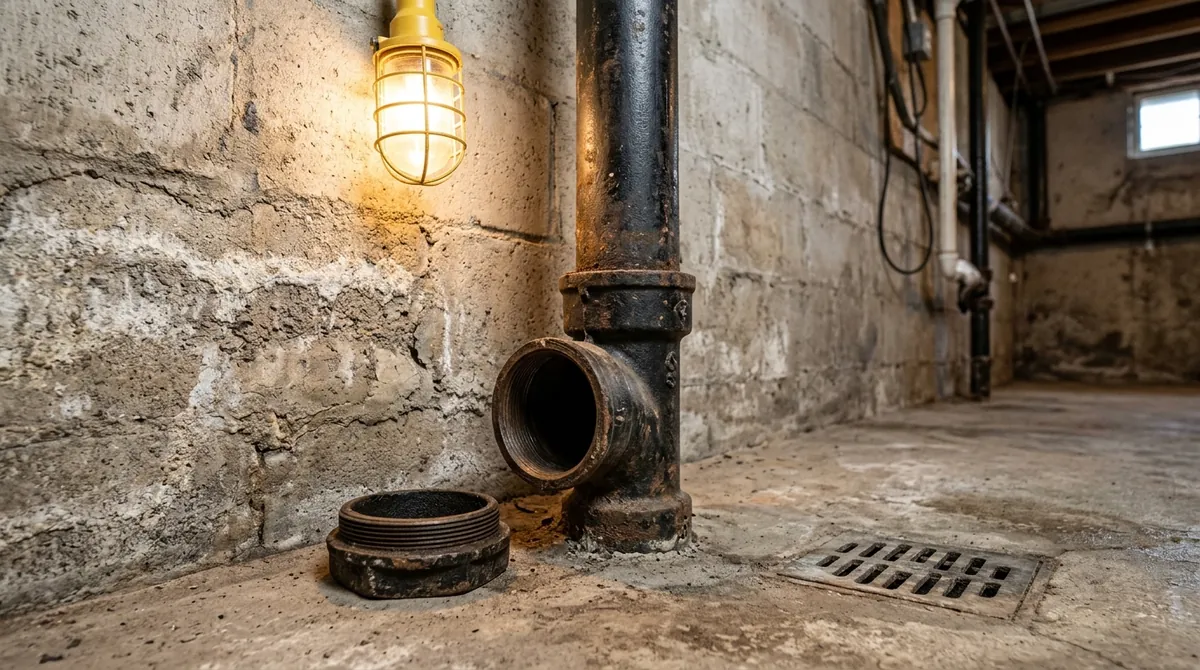
Before any cost conversation, it helps to know which part of the sewer is yours. In Sioux Falls, the city's own guidance on sewer backups says crews will check whether a blockage is in the city's sewer main or in your private sewer line, and that if the problem is in your private line, you need to hire a private drain-cleaning company to clear it (City of Sioux Falls, Sewer Backups).
In practice, the service line from your house out toward the main is the owner's responsibility to clear and repair. That is the section this guide is about. If sewage is coming up into the house and you are not sure where the blockage is, the city page lists what to do first.
What You Are Actually Paying For
A sewer repair quote bundles several separate pieces of work, and they do not scale together.
- Locating the fault. Finding exactly where the pipe has failed, and how deep it is, before anyone digs. Skipping this step is how a small repair turns into a long trench.
- Getting to the pipe. Excavation is usually the largest share. The deeper the line and the more that sits above it, the more digging, shoring and restoration it takes.
- The repair itself. Cutting out the damaged section and joining in new pipe, set to the correct fall so waste keeps moving.
- Putting things back. Backfill, compaction and, where the line runs under concrete or landscaping, the cost of reinstating what was there.
When two quotes look very different, the gap is almost always in the second and fourth items, not the pipe.
The Six Things That Move the Price
- Depth. Sewer laterals here are buried below the frost line, so a repair is rarely a shallow dig. Every extra foot of depth adds excavation and, past a certain point, trench safety work.
- Where the fault is. A break close to the house or near an accessible cleanout is cheaper to reach than one halfway across the yard or out under the street side of the property.
- What is on top of it. Lawn is the easy case. A driveway, a patio, a mature tree or a finished basement slab above the line all add cost, because they have to be opened and then put back.
- Pipe material. Older homes in central Sioux Falls and Brookings often still have clay or cast iron laterals. Clay joints let roots in; cast iron scales from the inside. Either can mean the damaged section is not the only weak point.
- How much of the line is affected. A single broken joint is a spot repair. A line with roots at every joint, or several sags, may be better replaced in a longer run than patched in three places.
- Ground conditions and season. Frozen ground, high groundwater in spring and heavy clay soil all make digging slower. A repair in January costs more to carry out than the same repair in August, which is one reason not to ignore a slow main line in the fall.
Spot Repair, Section Replacement or the Whole Line
Repair options sit on a scale, and the right one depends on what the line shows.
Spot repair
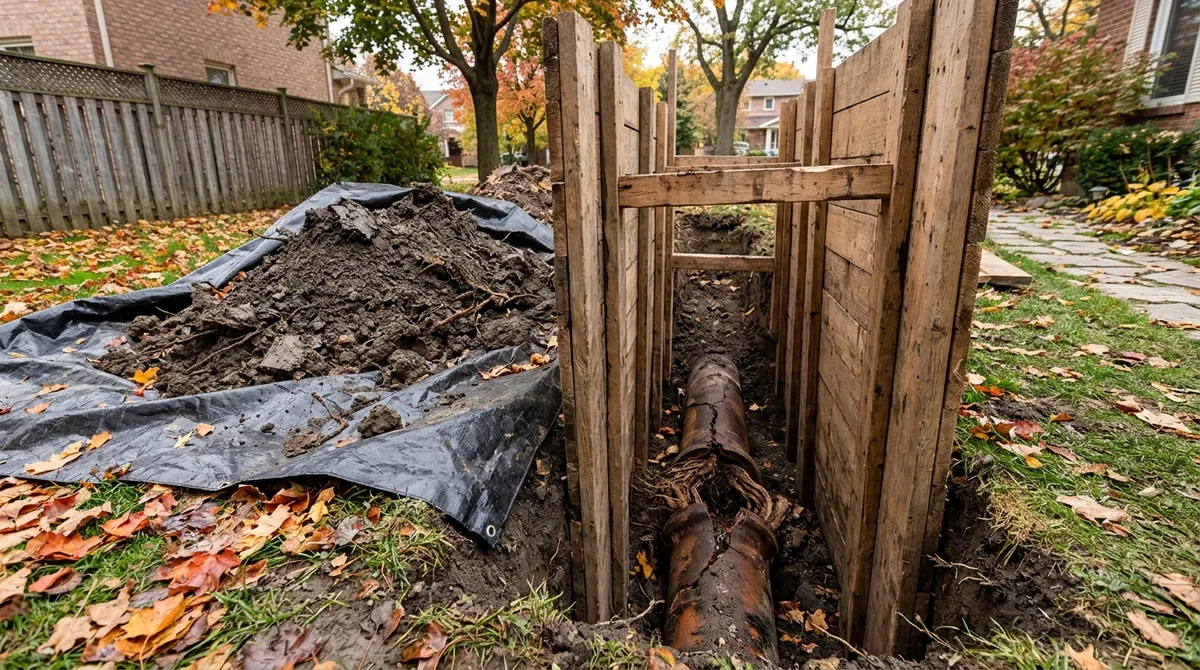
One defined fault, such as a cracked joint or a short collapsed length, with the rest of the line in fair condition. This is the least disruptive option and the cheapest when the diagnosis supports it.
Section replacement
Several faults close together, or a sag that runs for a stretch. Replacing that section as one run is often cheaper over time than paying for two or three spot repairs a year apart.
Full line replacement
Old clay or cast iron that is failing along its length. It costs more up front, and the case for it is that you stop paying for repeated clearing and repeated digs.
You may also hear about methods that repair a line without a full trench. Whether those suit a particular line depends on its condition, its size and how badly it has sagged, so treat any recommendation as something to ask about rather than assume.
Signs a Sioux Falls Sewer Line Needs More Than Cleaning
- The same main line backs up more than once a year.
- Water comes up through the basement floor drain when the washer or a bath empties.
- Toilets bubble when other fixtures drain.
- A sewer smell indoors that returns after traps have been refilled.
- A strip of unusually green grass, or a soft spot, over the line's route.
- Roots are cleared from the line, then return the following season.
Any one of these on its own can be a blockage. Two or more together usually point to the pipe.
How to Compare Sewer Repair Quotes
Ask each contractor the same questions, and the quotes start to make sense:
- Where exactly is the fault, and how deep? A quote with no location is a guess.
- Is this cleaning, a spot repair or a section replacement, and why? You should hear the reasoning, not just the answer.
- What does the price include for restoration? Lawn, concrete and landscaping reinstatement are often where quotes differ most.
- Is permitting and any inspection included? Work on the service line connection may need one.
- What happens if more damage is found once the pipe is open? A good quote says how that would be handled before work starts.
Be wary of a replacement recommendation made without the line being looked at, and equally wary of a cheap clearing that comes with no explanation of why the line blocked.
When to Call a Professional
Some drain work is reasonable for a homeowner. A single slow sink can often be cleared at the trap. A main line is different. If several drains are slow at once, or water is coming up through a floor drain, the blockage is beyond any one fixture and needs to be cleared and diagnosed properly.
If sewage is backing up into the house, stop running water, keep people and pets away from the affected area, and call.
Need Sewer Line Repair in Sioux Falls? Gold Standard Plumbing & Heating Is Ready to Help
Gold Standard Plumbing & Heating is locally owned, licensed, bonded and insured. We clear the line first, find the actual cause, and explain whether you are looking at a cleaning or a repair before anything is dug. You can read how we approach this on our drain and sewer services page.
Call us at (605) 530-6950 or contact us to book drain and sewer service in Sioux Falls, Brookings and the surrounding towns. We answer weekdays from 7:30 am to 5 pm.